Paycheck Deduction Calculator
A $150 pre-tax premium does not cost you $150. Enter your gross pay and deductions and see, for each one, the amount taken, the tax it saves and what it truly costs your take-home.
How the calculator works
Enter gross pay for one check, how often you are paid, your state and filing status. Then enter each deduction. The calculator prices the paycheck with no deductions, then with each deduction alone, then with all of them together.
The tax saved is federal income tax, Social Security, Medicare and state tax combined. The real cost is the amount taken minus that tax saved.
Worked example
A single filer in Texas earns $2,500.00 every two weeks. The $150.00 health premium costs $120.53 in take-home because it saves $29.47 of tax. A 5% traditional 401(k) takes $125.00 but costs $110.00. The same 5% to a Roth takes $125.00 and costs $125.00, because it saves no tax today.
With all four, take-home is $1,687.07 instead of $2,092.60. Income-tax wages are $2,225.00 and Social Security and Medicare wages are $2,350.00 on a $2,500.00 paycheck.
Which wages each deduction lowers
Not every deduction lowers every tax. Use the table below to see what a deduction changes, then read the line on your stub. If a deduction appears but your taxable wages did not fall, your plan may treat it differently. Check it with the pay stub calculator to confirm.
Pay frequency and fixed deductions
A fixed-dollar premium is set per paycheck, so the annual cost depends on how many checks your employer takes it from. Some employers take a year of premiums over 24 checks even when paid biweekly, which leaves two checks with no premium. Percent deductions follow gross pay each check. See biweekly versus semi-monthly pay.
| Deduction | Taken from check | Tax it saves | Real cost to take-home |
|---|---|---|---|
| Health premium, $150 pre-tax | $150.00 | $29.47 | $120.53 |
| Traditional 401(k), 5% | $125.00 | $15.00 | $110.00 |
| Roth 401(k), 5% | $125.00 | $0.00 | $125.00 |
| Union dues, $50 after-tax | $50.00 | $0.00 | $50.00 |
| Kind | Lowers income-tax wages | Lowers Social Security and Medicare wages | Notes |
|---|---|---|---|
| Pre-tax benefit (health, dental, vision, HSA, FSA, commuter) | Yes | Yes | Lowers federal income tax, Social Security and Medicare wages, and usually state wages. |
| Traditional 401(k) | Yes | No | Lowers federal and most state income tax wages. Social Security and Medicare still apply to the full pay. |
| Roth 401(k) | No | No | Comes out after tax. No tax line changes. |
| After-tax deduction (dues, life insurance, garnishment) | No | No | Comes out after tax. No tax line changes. |
Watch it worked through
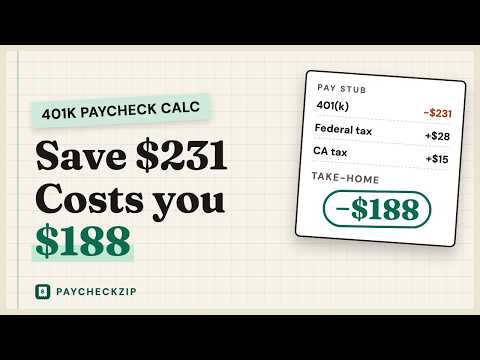


- 401k Paycheck Calculator: $231 In, Only $188 Out (YouTube Short)
- Pre-Tax Deductions: A $200 Premium Costs You Only $161 (YouTube Short)
- Roth 401k vs Traditional: $28 Less Per Paycheck? (YouTube Short)
Paycheck Zip videos use the same calculator as this page. Figures in a video are from the day it was made; the page is kept current.
Keep reading
Questions
How are paycheck deductions calculated?
Pre-tax deductions come out of gross pay first and lower taxable wages. Taxes are figured on what is left. After-tax deductions come out of the net after taxes. This calculator runs your gross pay with and without each deduction and reports the difference.
Which deductions are pre-tax?
Usually health, dental and vision premiums paid through a cafeteria plan, health savings account and flexible spending account contributions through payroll, commuter benefits, and traditional 401(k) deferrals. Roth 401(k), union dues, life insurance above the tax-free amount and garnishments are after-tax.
Does a 401(k) lower Social Security and Medicare tax?
No. A traditional 401(k) lowers income-tax wages only. Health premiums through a cafeteria plan lower income-tax, Social Security and Medicare wages.
What is a deduction versus a tax?
Taxes are required by law and come from your W-4 and the tax tables. Deductions are the other lines: benefits you chose, retirement savings, dues, and court-ordered amounts. See the [wage garnishment calculator](/wage-garnishment-calculator) for court orders.
Why does the tax saved differ by state?
States treat some deductions differently. California and New Jersey, for example, tax HSA contributions made through payroll even though federal law does not. Check your state’s rules before relying on the state portion.